
TDS Ref ID: 1532
Processing Method(s)
Injection Molding
Extrusion
Blow Molding
Compounding
Form(s)/Color(s)
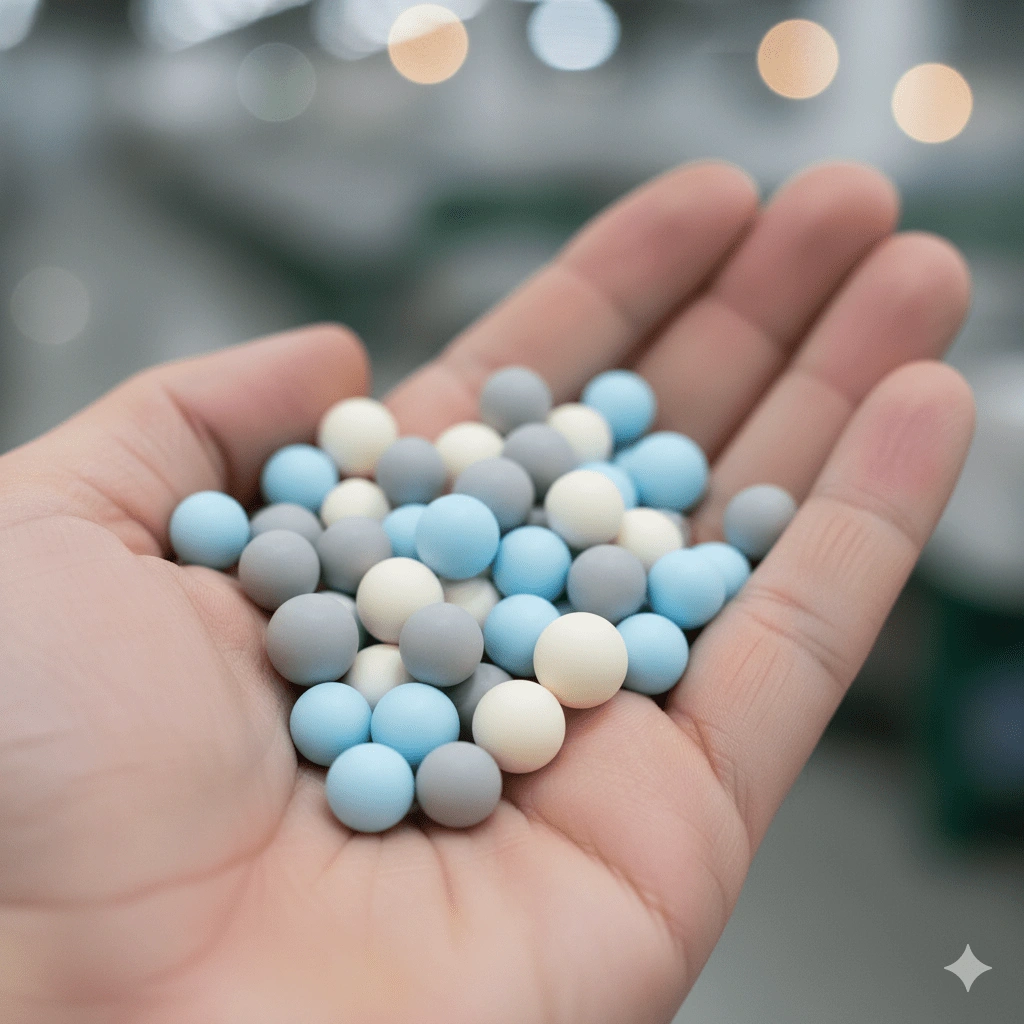
Pellets (White)
Pellets (Translucent)
Features
Internal Lubricant
Processing Aid
Scratch Resistance
Improved Slip & Feel
Mold Release Agent
End Uses
Automotive Interior & Exterior Parts
Electronic Housings
Appliances & Consumer Goods
Wire & Cable Jackets
Films & Sheets
| Category | Properties | ASTM/ISO Procedure | Unit | Value |
|---|---|---|---|---|
| Physical | Carrier Polymer | - | - | PE/PP/Universal |
| Silicone Content | - | % | 20-50 | |
| Melt Flow Index (MFI) | D1238 | g/10min | 0.5-20 | |
| Performance | Coefficient of Friction | D1894 | - | Reduced by up to 50% |
| Surface Gloss | D2457 | % | Improved | |
| Surface Gloss | D2457 | % | Improved |
Recommended Processing Considerations
Addition: Macrotone Silicone Masterbatch can be directly added to the polymer blend during compounding or at the main extruder feeder. Ensure thorough mixing for optimal dispersion.
Dosage: Typical dosage ranges from 0.5% to 5% by weight, depending on the desired effect (e.g., slip, mold release, scratch resistance) and the base polymer. Higher dosages generally lead to more pronounced effects.
Processing Temperature: Process at typical temperatures for the base polymer. Silicone masterbatches are generally stable at high processing temperatures but prolonged exposure to very high heat should be avoided.
Ventilation: Ensure good ventilation during processing as some volatile components may be released.
| Processing Guidelines | Value |
|---|---|
| Processing Temp. | 180-260 °C |
| Dosage Rate | 0.5-5% |
| Screw Type | Standard/Mixing |
SBS Polychem does not guarantee the accuracy of this information or the suitability of this product for any given application. These values are based on test specimens and should not be used to establish specification limits or fabricate tooling.